A working holiday in New Zealand is a great way to make money in order to fund your travels around the country. To understand what it’s really like on a working holiday, I interviewed my friend Raven who spent 6 months working on a dairy farm in New Zealand. Hopefully the details she provided will give you an idea of how to find a job, what the work culture is like, the pros and cons of a working holiday, and much more. To learn what it’s really like on a working holiday in New Zealand, keep on reading!
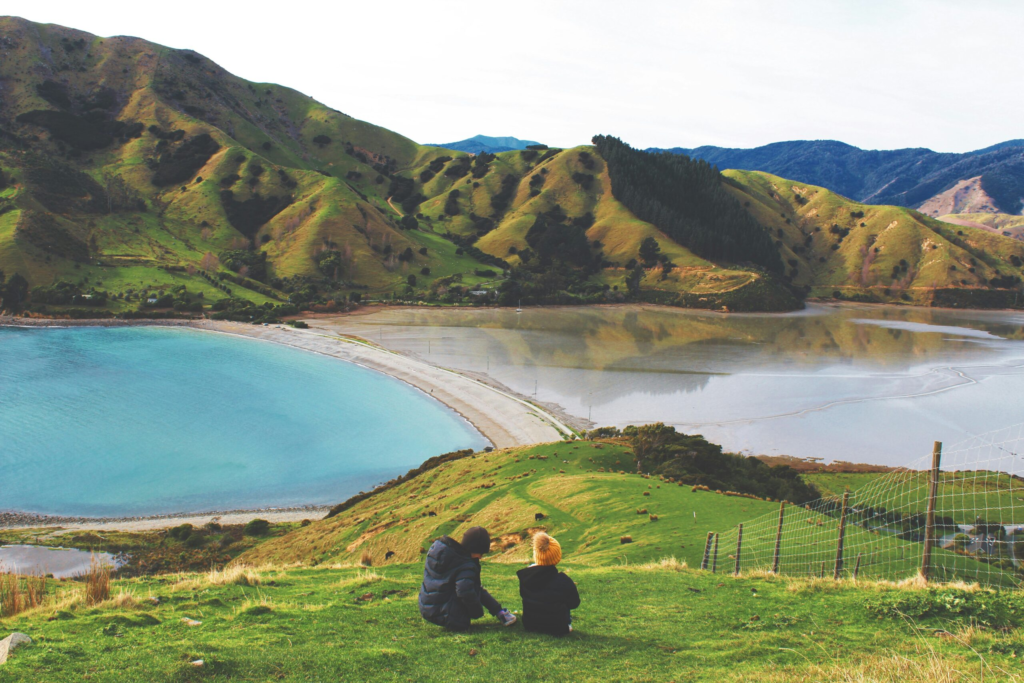
Table of Contents
What it’s Like on a Working Holiday in New Zealand: An Interview
Can you give an overview of your working holiday in New Zealand?
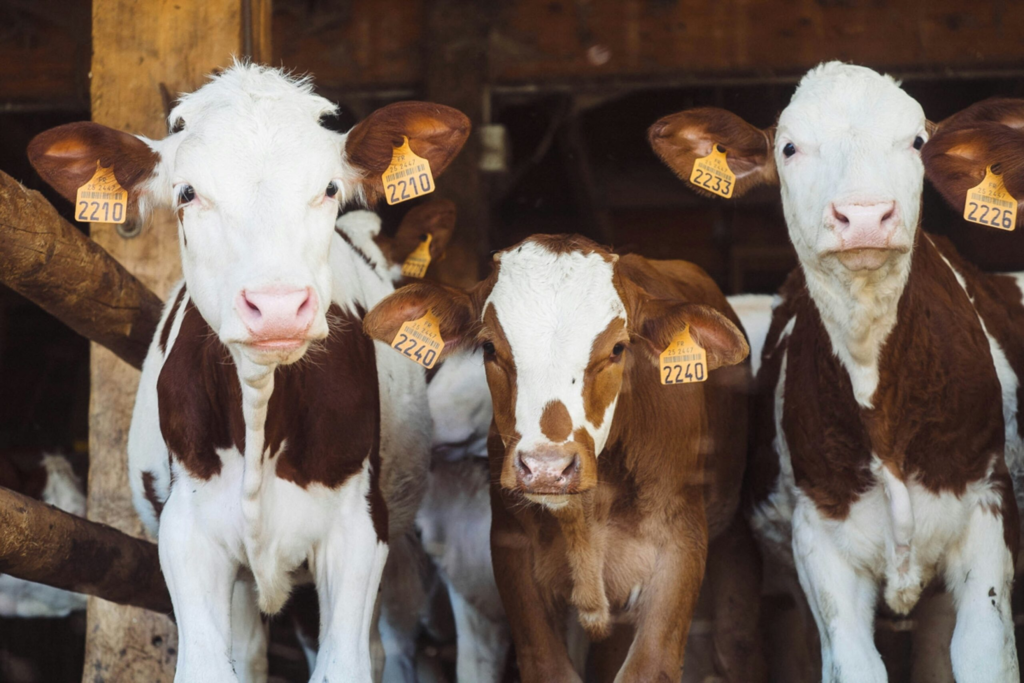
A: I was in Oamaru, New Zealand for 6 months. It is on the south side of the island near Queenstown. I worked on a dairy farm and the job title was calf counselor, I was the only one that worked with the baby cows. I had never done a type of job like that before so it was defiantly weird at times but it was really fun.
It was a big production, there were a couple thousand cows, but there were only five people in total that worked there. The workers were all from New Zealand, I was the only one on a work visa, for everyone else, this was their full time job. They were all very nice people.
Before I got to the dairy farm, my first job in New Zealand was working as an Au Pair but it was not for me because I am not really a kid person. So, I left that job and found this one.
How did you get a working holiday visa for New Zealand?
A: It was pretty simple, I just did the online application. I was living in Australia at the time and I knew I wanted to come to New Zealand so before I even came I filled out my application. It was pretty quick. [It only took] a couple weeks to be approved.
How did you find a job on a farm in New Zealand?
A: I found the job on this website called Gumtree [that no longer operates in New Zealand]. It’s like a New Zealand Craigs List. I sent them my resume, then they called me in for an interview and I met with the wife of the guy that owned the farm. I honestly have no idea why they hired me because I have no experience with baby cows or cows of any size.
Where did you live while working in New Zealand?
A: When I first got to New Zealand I was a live-in Nanny so I went directly to live with that family. They were a super sweet family but it just wasn’t what I wanted. I hated it. Children are not my forte, I am better with animals. The dad I was working for owned a construction company and there was a guy that worked for him who knew I hated it there. Him and his friend, both from Ireland, had a spare room in their house and they offered it to me for free. They also fed me. I got really lucky.
How did you get around? What was driving like?
A: [The man I lived with] let me borrow his car to go to work every day. So I got extremely lucky and I know that is not the norm. I did not need a special license, I just used my American one.
This is how I learned how to drive a manual because all of the cars in New Zealand are manual. They drive on the left, and the wheel is on the opposite side of the car, so I used my left hand for the stick shift. It actually was not as hard as I thought.
How did you communicate with friends back home while working abroad?
A: I usually just used Facebook messenger so that I did not need to pay for long distance. I got a new sim card in New Zealand. It was easy, I just [swapped out my US sim card] and put the New Zealand one in my own phone.
Compared to the USA, how different was the working environment in New Zealand?
A: It did not feel like a job. It was a very relaxed work environment which was nice. I was not really supervised, [which was strange] especially since I did not know anything. I feel like in America there is a lot more structure.
[Boss relations] were very chill. One time I broke the hose on the truck because I was trying to back up and I jackknifed the trailer. I felt so bad, and [my boss] was like “oh no it’s fine, next time we will just take off the hose and then you can back up.” She was super sweet.
[They family I au paired for at first] … I saw them now and again and they were super sweet [too]. There was no bad blood between us, I’m still friends with them on Facebook. Everyone is weirdly nice.
What was a day in the life of a dairy farmer like?
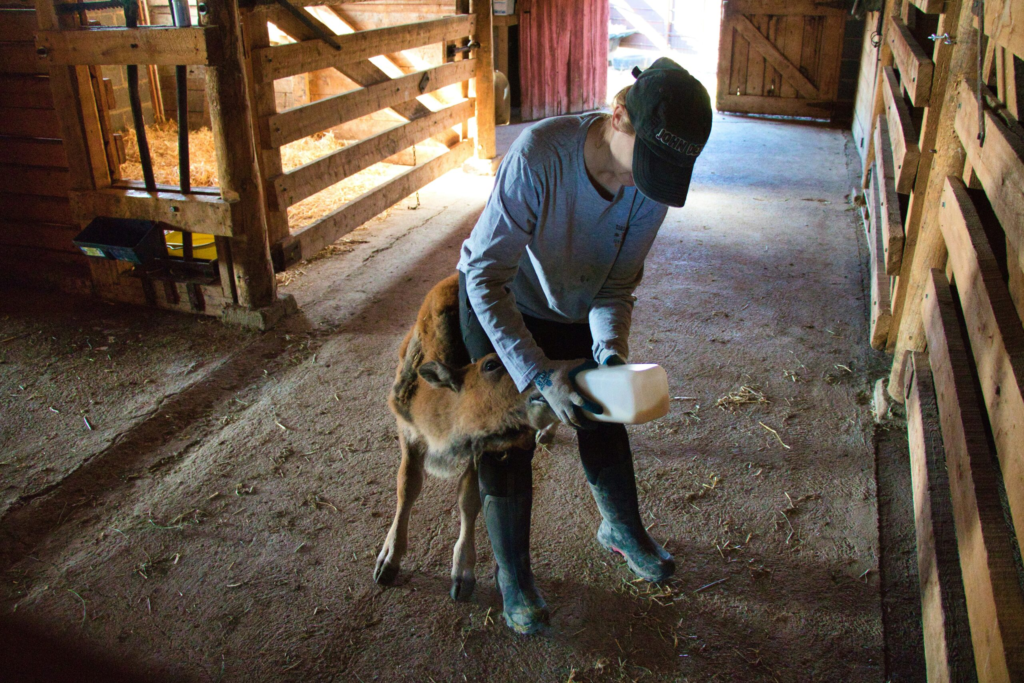
A: It started pretty early. I would usually have to be there at 5:30am because a lot of times the baby cows would be born in the middle of the night so I would have to get there early to make sure they got fed. There was one pen for all the new baby cows so I would go there first, meet the new babies, and tube feed them.
[Next] I would go to the [ones that were a couple month old] and I would bottle feed all of them. Then I would go get the truck and trailer that had a giant milk tank on the back that was attached to a hose and I would drive out into the field where the big green [feeding tank] was and fill [it] up for all the older baby cows. [The day] would usually end at 2:00pm.
Sometimes I would help with other random projects. I helped with some fencing, gave the older cows injections… I once spent the day drilling holes into metal [milk pump machines].
I worked 9-10 hours [per day], 5 days a week. I did have two days off and the owner’s wife would take care of the baby cows [when I was gone].
What was training like?
A: It was [only] a couple days and the owner’s wife was with me. She walked me around and showed me how to bottle feed cows and drive the truck around. It was the easiest, most relaxed training.
The first time I ever tube fed a cow she told me, you put your fingers in the left of their mouth and you aim the tube down the right. She showed me once and then was like, “Here, you can try.” I did it and everything went fine. I pulled out that tube and she was like, “Oh good you didn’t drown the cow…” Apparently if you put it down the wrong side the cow drowns… but she did not tell me till afterwards.
What were the pros and cons of farm work in New Zealand?
A: The pay was really nice, especially for the type of work that I was doing. Then, getting to play with baby cows every day.
Cons… This is going to get a little dark… The biggest cons of the job was that there was a sickness that went through the ranch while I was working there and we had to kill a lot of baby cows. I am not proud to say this, but you get desensitized to it really quickly.
Is there anything you wish you knew before working on a farm?
A: I don’t know if I realized how long the days would be and how physically and mentally exhausted I would be. There would be some days I would get home, pass out, then wake up again at 5:00am to work.
I sometimes wish I had taken the job for a lesser amount of time and then done something else… maybe do it for a couple months to get the experience and then take an easier job so I could have traveled more and felt more alive.
Any advice for prospective working holiday workers?
A: My biggest advice, especially if you are looking to work on a farm, would be to know that you are going to work a lot and save a lot of money, so plan extra time to actually go and travel.
How much money did you make and save on your working holiday?
A: I got paid biweekly, just like a regular job, and I got paid $18NZD an hour.
I saved a good amount, especially since I was not doing much traveling. I think the biggest cost [was that] I went out to a lot of restaurants because I wanted to try a lot of the food. I probably saved two grand in New Zealand dollars. It was a bit less when I came back to the USA [because of devaluation and exchange rates] so that was a bit sad.
What was the process of setting up a New Zealand bank account?
A: It was really easy, I brought my passport and my work visa and then they just set it up. I had a debit card, same thing as in the USA. Then I had to close my bank account before I left.
How did taxes work when you got home to the USA?
A: It was fine. It got a little confusing because I also spent 6 months in Australia. [When I came back to America] I paid for someone to do my taxes that year so that I did not have to think about it. The weird thing though, is when you are living out of country and you are a US citizen you still have to do your state taxes.
What was the best and worst parts of living in New Zealand?
A: It’s absolutely beautiful. Some of the sunsets I saw there were the most beautiful sunsets I had seen in my entire life. And just the overly friendly nature of everyone I met when I lived there. Everyone in New Zealand is weirdly nice. I can’t remember a single bad person I met. They say New Zealand is one of the safest places because there are no deadly animals that can kill you and everyone is too nice to kill you.
I don’t actually think there were any cons to living in New Zealand, just that of the job.
What were some culture shocks you had living in New Zealand?
A: It’s fairly similar in the states. The biggest things I had to get used to was everyone uses the word c**t a lot. It’s like our b***h. The way they phrase it is that there is a good [form] and a bad [form] and you can tell how they mean it by the infliction. The amount of times I was called that word in New Zealand was insane. That was probably the biggest “had to get use to“ thing.
[Also] when you go to a gas station, you get gas [first] and then pay for the gas. Which is mind blowing to me. I remember the first time I was trying to figure it out and I went into the gas station and [asked], “excuse me how do I pay for this?” They [said], “you do it and then you pay.” I [asked], “what if I drive away”… and they were like, “don’t?” It is not like that in the states.
What is something you wish you knew before living in New Zealand?
A: My friend had a manual car, so maybe I would have practiced more on that because when I got the live in nanny job the dad looked at me and said, “So you can drive a manual?” I was like, “No I can’t.” It would have been nice if I had learned to drive it before I got there.
Do you have any regrets about taking a working holiday?
A: I regret that I did not travel more. With this job I was honestly so tired because it was very early mornings, a lot of walking around, lifting up baby cows… so I was very tired at the end of the day. On my days off I would go hang out in town with my two roommates, sometimes we would go into Queensland or to the beach. It was truly like New Zealand was my home because I did not travel as much as I probably should have.
Conclusion
Working on a dairy farm is just one of the many different jobs you can do on a working holiday in New Zealand. Thank you to Raven for sitting down with me and discussing her experience. If you are thinking about doing a working holiday in New Zealand, hopefully this post helped give you an idea what your experience could be like. Have you been to New Zealand on a working holiday? If so, please share your experience in the comments below!