If you enjoy wading into rivers to cast a line and reel in a fish, then a fly fishing guide may be a great summer job for you. Of course, there is a lot more to a summer guide job than just catching your own fish. Being a fly fishing guide means creating a memorable experience for your guests, taking care of your gear, understanding how to fish the river, and more. To understand the job and what to expect, I interviewed my friend Mette who has spent several summers working as a fly fishing guide.
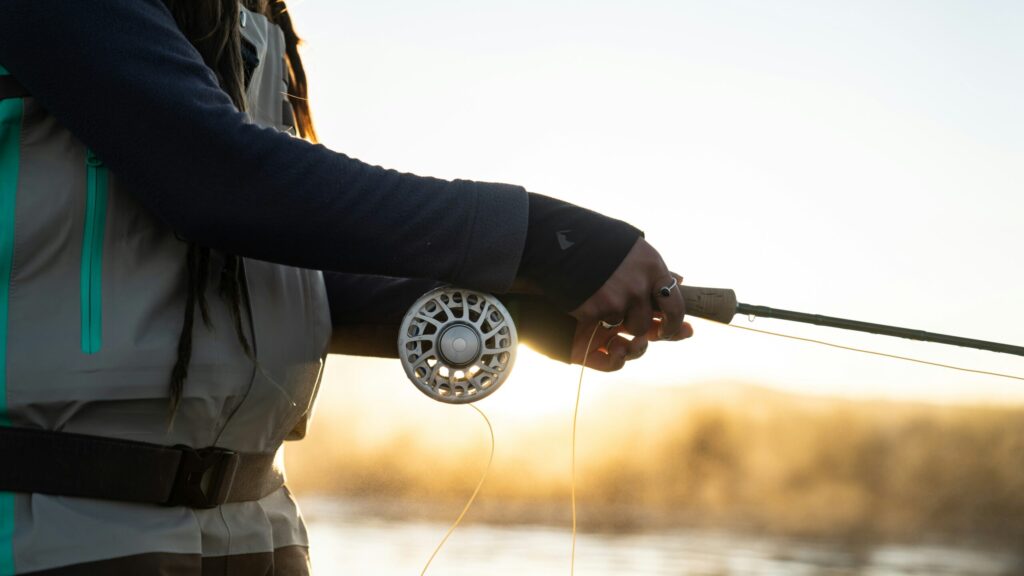
Table of Contents
An Interview with a Fly Fishing Guide
How did you start working as a summer guide?
A: I have always been outdoorsy. I first became a guide for a wilderness youth ministry through Young Life. I got certified in wilderness advanced first aid and we focused on water safety, gear you need on the water, communications with marine radio, etc… I have been guiding since 2015.
How did you become a fly fishing guide?
A: I was traveling in New Zealand and met up with a friend. She told me about [this] operation and what it was like, it felt familiar to my background. So I thought, ‘I should apply to be a guide’.
I started in the winter season doing our nordic ski program, and I learned a bit of ice fishing to be a back-up guide for those trips if needed. In the summers I was a hiking guide. The manager approached me [to ask about fly fishing]. I grew up in [the pacific north west] and have always been around water sports. So, I decided to tackle it. The more I studied it the more I enjoyed it.
How long did it take you to become proficient in fly fishing?
A: I spent my winters studying fly fishing to know what it would look like and what [my] proficiency would need to be. If you hit it like you do any college course you can get a really good base line of the sport. Then [I had] a whole summer of guiding.
June through October was when I saw the changes of each month and got an understanding that October fishing is going to be very different than June fishing, especially in our region. [During] my second year of guiding, I started to fine-tune and hone in more. Fly fishing is a lifetime sport. You never stop learning, you never stop trying things and tweaking, and it is probably one of the most humbling sports.
What experience did you need to be a fly fishing guide?
A: With guiding [in general] I needed to have some prior experience. It allows you to do navigation and risk management out in different areas of the national forrest. [The] medical training [I had] was definitely helpful, we do [need] to have a level of [medical] certification. Wilderness first aid, advanced first aid, and wilderness first responder are definitely [courses] I would suggest for people go find and get training in. It is the industry standard if you are considered a guide.
Knowing how to handle a group, and if an incident happens knowing what response to go on to make sure people are kept safe… Like, if you see the weather rolling in, knowing how to be prepared for that… Those are skills you have to gain. We are in the hospitality industry, be smart, be competent but don’t have a big ego, [and] be excited to share a passion that you have.
Aside from a fishing license are there any certifications you need for the job?
A: No, nothing that is required at the moment. [Here] they required the medical certification and we needed our fishing license to be able to fish the waters.
How does obtaining a fishing license work for a summer guide?
A: It is different per state. The first summer as a fly fishing guide [my employer] bought it. [They] purchased the fly fishing license for all of [the guides] on the Colorado Fish and Wildlife website. [The process and price were not different for a guide versus a regular fisherman.]
Did you have to purchase your fishing own gear?
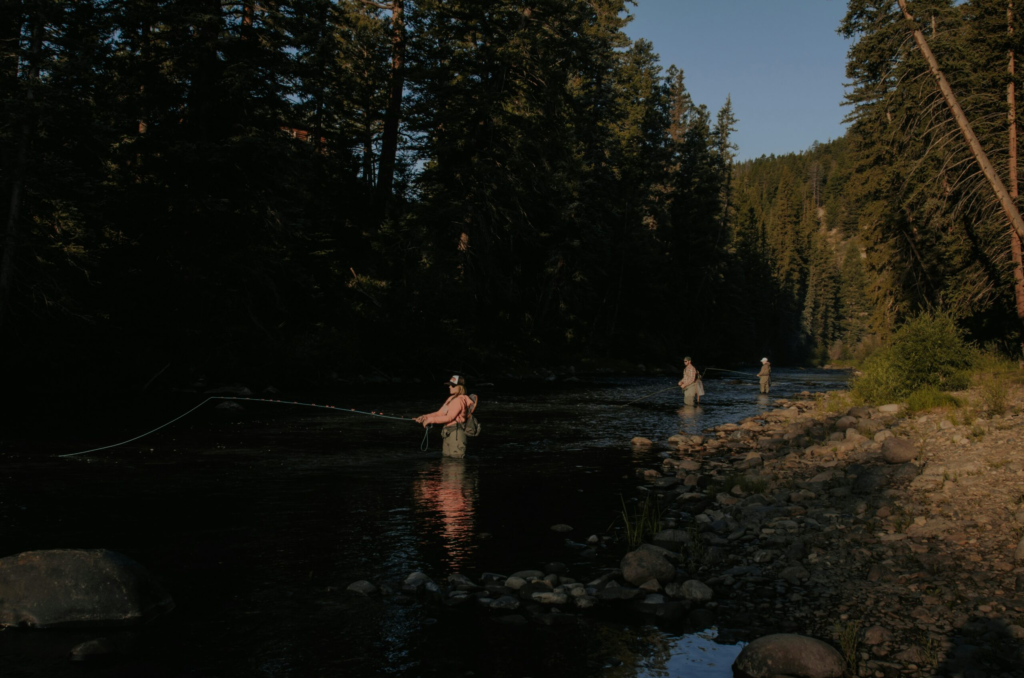
A: I did have to get a little bit of my own gear. It is nice to have your own net, waders, and boots because you are wearing them everyday. [The company] provides the flies, the rods, the reels, the fly lines… all of that kind of stuff. If we really needed waders to borrow we could borrow the [ones the shop had] as needed.
How do you know what type of gear you will need?
A: It depends on what waters you’re fishing. If you are in Idaho or Colorado, versus if you are fishing for Steelhead in Washington… it’s going to be different gear. Read the Orvis book on the basics of fly fishing [and] watch one or two teaching companies that have instructional videos. There is a lot of resources out there that can help.
[If you know where you] will be fly fishing, get into the type of gear you will need for that type of fishing. Like… these are the kinds of bugs that are going to be in that region so these are the type of flies that I will be putting into my fly box. You also have to get into the physics of fly fishing. So the casting… that all depends on what type of fish you are going for and the size, and weight, of rod you are using.
Is there any general gear you suggest someone have?
A: There is so much cool gear out there. Polarized glasses are a must. You got to be able to see through the water, especially if you are sight fishing. [A] water proof watch is great.
We wet wade a lot so I’ll always bring pants on the water instead of shorts. When you are out there walking around and slip and hit your shin on a rock its a little bit nicer to have pants on. Sun hoodies and buffs are really nice for bugs, and when you are out there on the high alpine exposed creeks you aren’t just sitting in the sun getting baked, you have protection. If you are using sunscreen get something non-toxic for when it comes off in the water. Reef safe is good.
Also a wading staff is nice. Or if you have a long handled fishing net you can use that as a wading staff. There are some [that are] shorter or [have] smaller baskets… we get the longer [ones]. I think its an 18 or 21 inch net, with an 18-20 inch handle that works as a wading staff.
What does a day in the life of a fly fishing guide look like?
A: We get [to work] at 7:30am, we do some chores, and then [make] sure we know who is signed up for the morning activity and what [gear] we need. [In] our program our trips for the morning leave around 9:30am and we aim to be back for lunch by 12:00pm – 12:15pm. [Afternoon trips are between 2:00pm – 4:30pm.]
[After that], getting our vehicles pulled around, getting our fly boxes reset, and talking to each other about what was working yesterday and what we anticipate might be happening now based on what could be hatching.
Every trip is different depending on who you are taking and where you are going. An all day trip versus a half day trip does not look too different. [On an all day] you are able to cover more ground or maybe drive to a further destination, or maybe hike in 2 or 3 miles [to] fish an area and hike out. So it is more of a mixed activity.
What other responsibilities does a fly fishing guide have besides taking people out to fish?
A: Gear takes up a lot of the time. Once a week we are deep cleaning everything. The wading socks we are deep cleaning in buckets to disinfect and keep stains out. The boots we are deep cleaning. Waders we brush off and spot treat them each week. If we need to, we put protectant on the fabric or the leather. The rods are some of the most delicate parts of our equipment, so that care is really intense.
We do a lot of maintenance, sometimes daily, taking out knots and rerigging. Even if it looks good to the eye, we are still taking it apart to get the grit and dust off everything so it can run smoothly. We are always doing more orderings, consulting each other on what we think should be [used]. Just managing all of the equipment.
Is there a better state or location in the USA to work as a fly fishing guide?
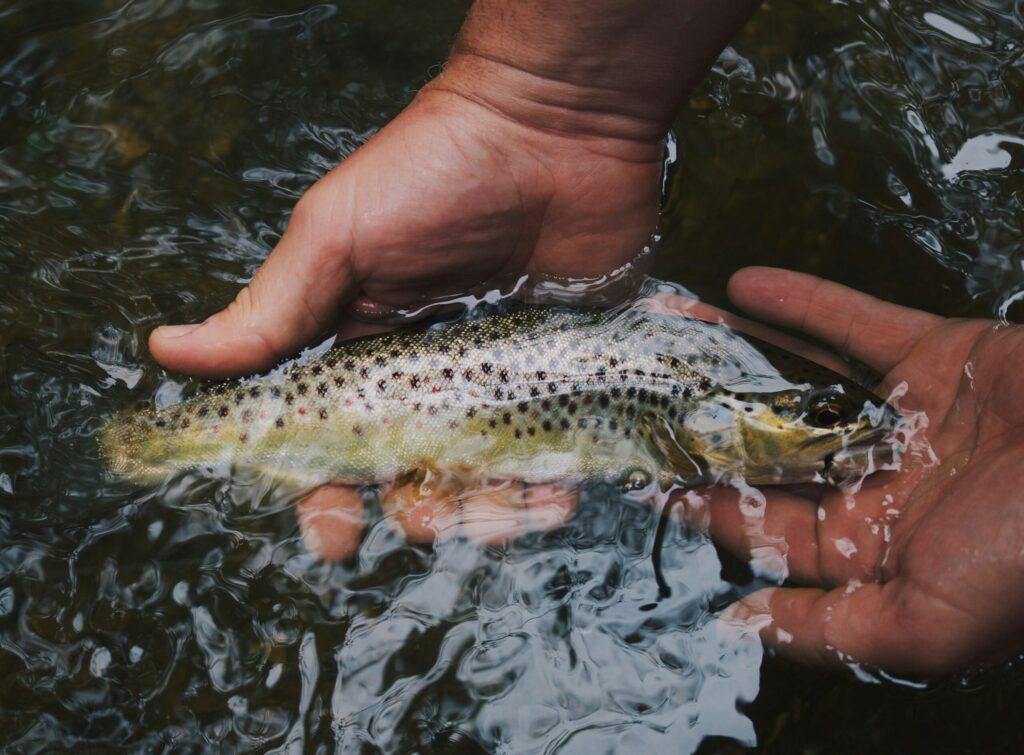
A: It all depends on the fish you want to catch. In Colorado we get a lot of folks from the Carolinas and Virginias, and a handful from Wisconsin and Michigan. The Montana and Idaho crew might come to Colorado but they are more proficient [in their waters] and have their own guiding gigs in those states. I don’t know if we are one of the gateways for folks from other regions in the USA to test the waters, or if they are [attracted to] the rocky mountain high fly fishing’ experience.
What would you say is the biggest misconception about the job?
A: I think one of the biggest misconceptions is that fly fishing guides fish all day. We actually never touch the rod. We will pack up all the gear, get folks to the spot, get the gear on and set the right way, walk [clients] through how you do it… But often times our flies aren’t really hitting the water because we don’t want to disturb that opportunity for the guests. So, we pass the rods to the guests and it is teaching and coaching.
So if you want to be a fly fishing guide just realize that you might not be fly fishing yourself. You are going to do that in your off time. After work you can go back out.
What is a surprising aspect of the job that new fly fishing guides don’t expect?
A: The job is about expectation management. [Where we work], it is probably very different than a Montana private fly shop that takes you on a 4 hour float trip. [Guides in private fly shops face a lot more pressure from their clients to catch fish.] The level of intensity we are doing [here] is very technical but the pressure from our guests is not as grand as it could be in some of those other waters.
With our guests, 80% that are going to be fly fishing are looking for an awesome experience. They want to laugh, make memories, take some good photos, and then they want to catch some fish. For the other 20% of the guests… they have been coming year after year, they know the one single fly fishing guide they want to go out [on the water] with.
What is the best part of working as a fly fishing guide?
A: Being outside in such a beautiful place. If you get stressed out or are putting too much pressure on your performance, [you have moments where you] come to that pause. It’s like, ‘Wow… Look at where I am right now. I get paid to do this. That’s crazy!’
Obviously there is that level of professionalism and you need to do a job, but the outdoor industry is so cool and guiding is such a great opportunity for personal growth. Just being out in nature where everyone can enjoy some aspect of it. I am at a desk job now, [believe me] it’s a big blessing just being outside. Even on the windy days or the rainy days, there is never a bad day it is just bad gear.
What is the most frustrating part of the job?
A: When you get skunked. In the sense that you do everything that you can and you don’t come away with a fish or a success in that sense. That is always frustrating. Another hard thing is management of the group. [When] you are overloaded with too many people you can’t give what you want to each person. You have to kind of give them just a little bit, and when you walk away its like ‘oh man I did not manage that the best that I could have’ .
What can someone put on their resume to better their chances of getting a job as a fly fishing guide?
A: With any kind of guiding, safety and teaching are two big things, [so put] any type of experience that you have [in those areas]. If you are a lifeguard, give an example of how you mange that or what you focus on to keep people safe. If you are a teacher, an assistant coach, or a tutor… anything like that that showcases you are good working with people one on one and you can break down systems of whatever [subject, in order to teach].
As a hiring manager now, when I look at a resume [I look at], if the grammar is good, is not too overloaded, is it focused on what job [they] are actually looking for? Even if you don’t have the exact experience, tell me that you could be a person that would be able to learn these things. I always like to see a blurb at the top that explains a bit about [you] too.
What are your thoughts on submitting videos, along with a resume, that show abilities such as casting techniques?
A: We are starting to [ask] our fly fishing folks to send in a little snip-it of them. Something like, ‘hey, this is my system, this is how I set up, and I am going to show you a bit of casting’… Just out in a grass field or in their backyard. That gives us an idea of their presentation [and] their personality.
When you are in front of guests you are hosting them, you are teaching them, you have to be friendly and be inviting. Then [show] the skill set of casting or even knowing how to hold the rod correctly.
If you can showcase that kind of stuff, it probably gives you a better chance than that 40 year old fly fishing guide who has been doing it for years but he is not a team player.
Any advise for future fly fishing guides?
A: If you want to get good at fly fishing, just get out there. Work through what it takes… there are tons of techniques, it’s not just about luck. A lot of it comes down to muscle memory and practice, so go have fun with it.
Also, there is such a supportive community out there in the guiding world.There are folks that are in whatever age group or gender you are. But you have to look for it, it wont just drop in your lap. Commercials, advertising, and magazines throw stuff in our face that is like the ‘epic Everest mountaineering trip’ or whatever, and it’s like, ‘I just want to hike in my park’… and you can.
Conclusion
Like most jobs, there is a lot more to being a fly fishing guide than meets the eye. Thank you so much to Mette for taking the time to share her experience and provide all the details of what it’s like to be a fly fishing guide. Have you worked as a fly fishing guide? What was your experience like? Please share your thoughts in the comments below.